Official DE OpenBlackHole BH 1.4
image including patches, DTS Surround, DVB-T Automatic, CrossEPG, Cron, WebInterface
working and Inadyn, DynDNS plugins preinstalled.
Our Support Forum : www.japhar.com
Description of Features of DE OpenBlackHole BH 1.4
- Auto DVB-T
- DTS Surround
- CrossEPG Plugin (0.6.2 svn 305)
- DynDNS Plugin
- Inadyn Plugin
- Cron
- BlackHole GUI
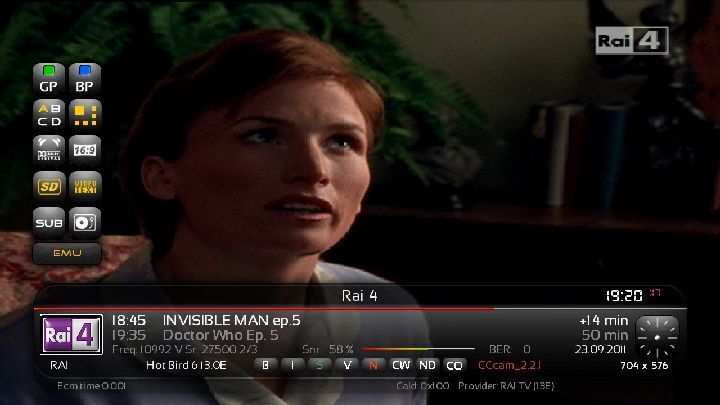
a) Showing InfoBar CAS infos
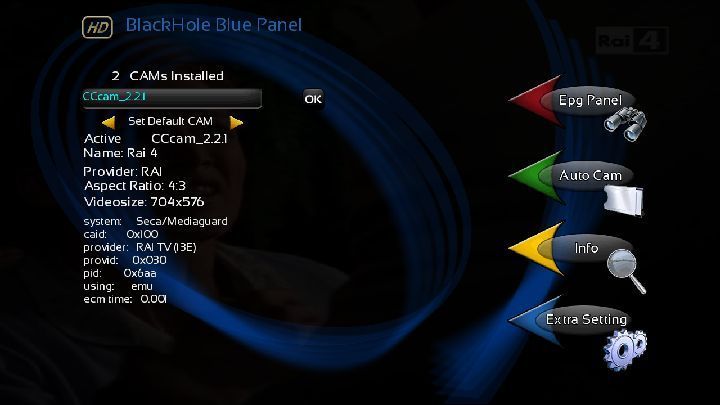
b) BluePanel
c) AutoCam
d) Extra Settings Menu e) Cron Manager
f) Osd Settings (set Picons to LCD)
g) Devices Manager
h) Kernel Modules Manager
i) Fast Plugin Settings]
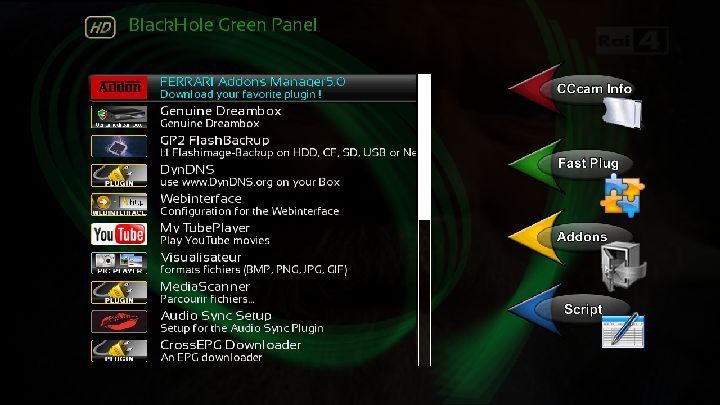
j) GreenPanel
k) Script Manager
l) System Setup : Show Event-progress in channel selection
...
P.S.: After installation and regularly, install the latest patch available on the Addon Manager Panel to have latest functionnalitites active and fully working.
DM800se (Japhar Sim) : Download here
or From datafilehost.com or from MEGA
DM800se (Ferrari) : Download here
or From datafilehost.com or from MEGA
DM800se (Sim2 box) : Download here
or From datafilehost.com or from MEGA
DM800se (eStar Sim) : Download here
or From datafilehost.com or from MEGA
DM800se (Original box) : Download here
or From datafilehost.com or from MEGA
DM500HD (Japhar Sim) : Download here
or From datafilehost.com or from MEGA
DM500HD (Ferrari) : Download here
or From datafilehost.com or from MEGA
DM500HD (Sim2 box) : Download here
or From datafilehost.com or from MEGA
DM500HD (Original box) : Download here
or From datafilehost.com or from MEGA
DM8000 (Japhar Sim) : Download here
or From datafilehost.com or from MEGA
DM8000 (Ferrari) : Download here
or From datafilehost.com or from MEGA
DM8000 (Original box) : Download here
or From datafilehost.com or from MEGA
DM800 (Japhar Sim) : Download here
or From datafilehost.com or from MEGA
DM800 (Ferrari) : Download here
or From datafilehost.com or from MEGA
DM800 (Sim2 box) : Download here
or From datafilehost.com or from MEGA
DM800 (Original box) : Download here
or From datafilehost.com or from MEGA
DM800 (Release Praline Sim 1.0 SSL70) : Download here
or From datafilehost.com or from MEGA
DM800 (Release Praline Sim 1.0 SSL69) : Download here
or From datafilehost.com or from MEGA
DM7025/+ Mips (SSL83) : Download here
or From datafilehost.com or from MEGA
VU+ Solo (Ferrari v2) : Download here
or From datafilehost.com or from MEGA
VU+ Solo (Ferrari Kernel v3.1.1) : Download here
or From datafilehost.com or from MEGA
VU+ Solo (Ferrari Image v3.2) : Download here
or From datafilehost.com or from MEGA
VU+ Solo2 (Ferrari) : Download here
or From datafilehost.com or from MEGA
VU+ Uno (Ferrari) : Download here
or From datafilehost.com or from MEGA
VU+ Duo (Ferrari) : Download here
or From datafilehost.com or from MEGA
Maturenl 24 09 28 Arwen Stepmom Fuck Me Hard In Free ((new))
The first major dynamic modern cinema explores is the —the conscious, often exhausting effort required to forge a single household from disparate parts. In earlier films, blending families was often a problem to be solved by a single event, such as a wedding or a wacky scheme. Modern narratives reject this simplicity. The Parent Trap , while rooted in a comedic premise, shows the Hallie and Annie not merely as mischief-makers but as architects of their own family’s reunion; their labor involves emotional manipulation, cross-continental travel, and the slow reconciliation of their parents’ old wounds. Similarly, Little Miss Sunshine presents a multi-generational blended unit—Olive, her brother Dwayne, her suicidal uncle Frank, her grandfather, and her stressed parents—all thrown together in a rickety van. The film’s genius lies in showing that integration is not a destination but a process of shared breakdowns and small victories. The labor is not about erasing differences but about finding functional harmony amidst dysfunction. The famous final scene, where the entire family dances on stage to “Superfreak,” is not a resolution of their problems but a testament to the fragile, hard-won solidarity they have built through crisis.
Filmmakers use specific cinematic tools to visually communicate the disjointed yet evolving nature of blended families: maturenl 24 09 28 arwen stepmom fuck me hard in free
The most radioactive terrain in any blended family is the sibling relationship. Cinema has historically ignored the complexity of "step-sibling rivalry," reducing it to a brief montage of pranks. Modern films are digging into the grief curve. The first major dynamic modern cinema explores is
The impact of these portrayals cannot be overstated. By reflecting the complexities and realities of blended family dynamics, modern cinema has helped to: The Parent Trap , while rooted in a
This public link is valid for 7 days and shares a thread, including any personal information you added. This link or copies made by others cannot be deleted. If you share with third parties, their policies apply. Can’t copy the link right now. Try again later.
A second, more psychologically intricate theme is the . Modern cinema recognizes that members of a blended family often inhabit different emotional territories, caught between the old family unit and the new one. The central question becomes: to whom do I owe my allegiance? Wes Anderson’s The Royal Tenenbaums is a masterful study of this tension. The adult children—Chas, Margot, and Richie—share a step-sibling dynamic (Margot is adopted) and are forced to re-navigate their bonds when their estranged, fraudulent father, Royal, re-enters their lives. The film maps loyalty not as a binary (old vs. new) but as a layered cartography of shared trauma, artistic collaboration, and failed expectations. Chas’s fierce protection of his own two sons following his wife’s death directly mirrors his inability to trust Royal again, illustrating how loyalty to one’s immediate offspring can conflict with the possibility of a broader family reconciliation. More recently, The Mitchells vs. the Machines literalizes this geography: the Mitchell family—father Rick, daughter Katie, mother Linda, and young son Aaron—must physically journey across a robot-infested landscape. Rick’s inability to see Katie’s filmmaking passion as anything but a distraction creates a loyalty rift. The film’s climax, where Katie uses her “weird” movie-making skills to save the family, is a powerful resolution: loyalty is not about choosing sides but about being seen by your new family for who you truly are.
For support click on the LINK below
LINK